How To Turn Homeownership into a Side Hustle
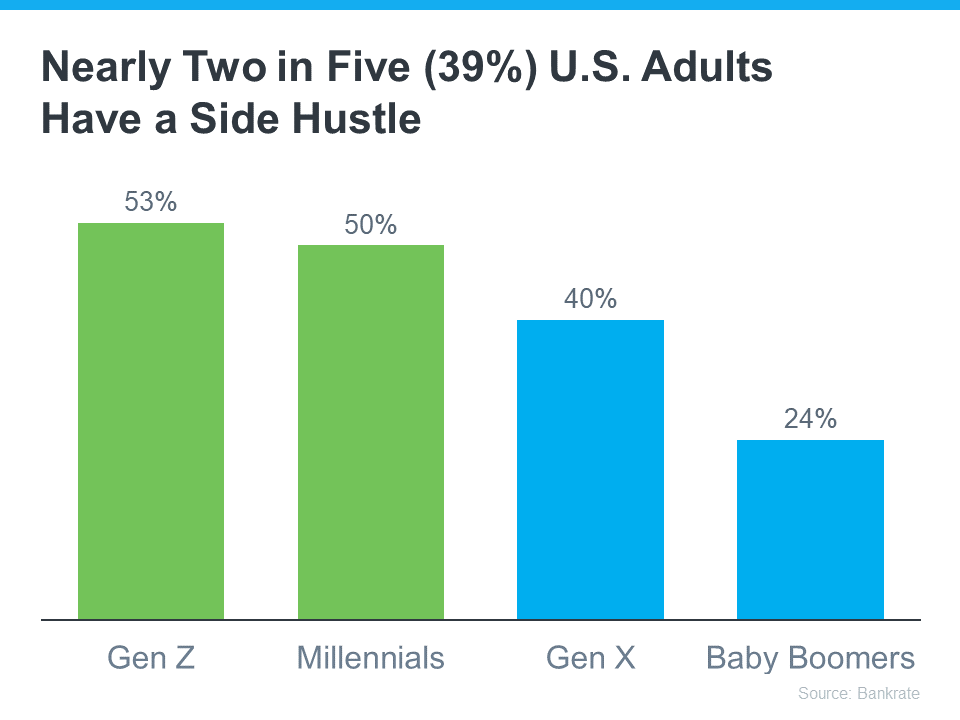
Does the rising cost of just about everything these days make your dream of owning your own home feel less within reach? According to Bankrate, many people are seeking additional income through side hustles, possibly to cope with those increasing expenses and save for a home. This trend is particularly popular with younger individuals who may be dealing with student loan debt (see graph below):
Here are two strategies that can not only make homeownership more affordable in the short term, but turn it into a lucrative side hustle that can pay off down the road.
One thing you could do to help you break into homeownership is consider purchasing a fixer-upper. That’s a home that may be a bit less appealing and as a result has lingered on the market longer than normal. According to a recent article from U.S. News:
“The current state of the housing market may have you expanding your options to try to find a home that you can afford. A fixer-upper that needs some updating and a little love can feel like a welcome alternative to move-in ready houses that go off the market before you can even take a tour.”
By opting for a home that requires some work, you may see two big benefits. For starters, you may find it’s easier to find a home because you’re not looking for that perfect option. Plus, it may also help you enter the housing market at a lower price point. This strategy provides a more affordable way to become a homeowner while also offering the potential for future profits.
Yes, the home may need a little elbow grease, but investing time and effort into gradually enhancing your house not only makes it a home but also increases its future market value. So, while you enjoy the satisfaction of turning a house into a home, you're also building equity that can be unlocked when it's time to sell.
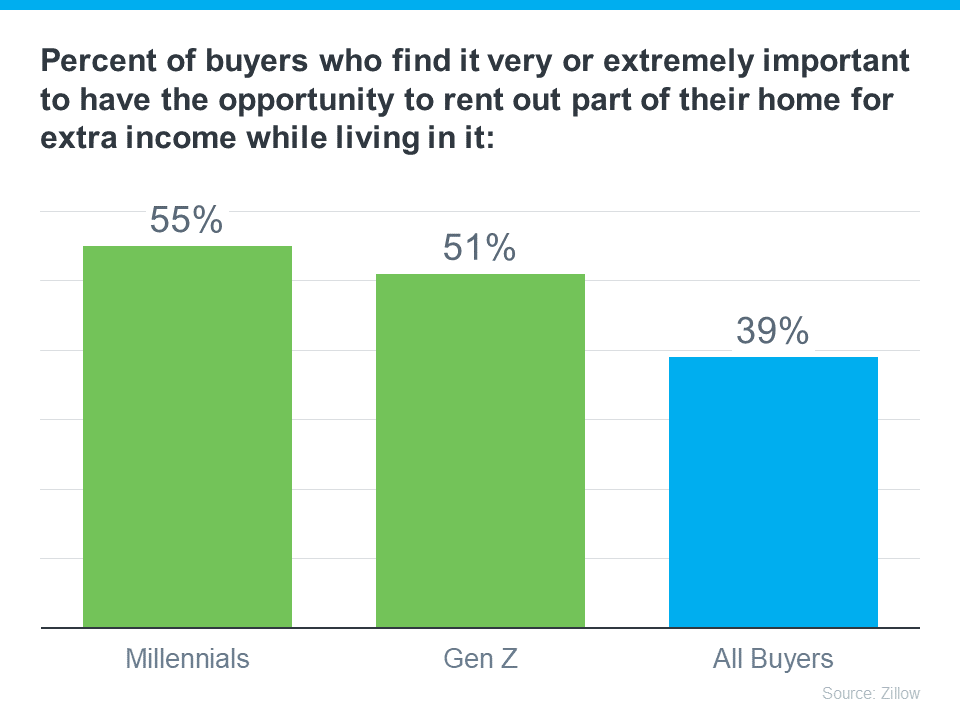
Another savvy strategy is to purchase a home with the upfront intention of renting out a portion of it. According to a recent press release from Zillow, renting out a part of their home is already very important for most young homebuyers (see graph below):
This approach serves a strong purpose. As Manny Garcia, Senior Population Scientist at Zillow, says:
“For those first-time buyers navigating the ‘side hustle culture,’ where a regular 9-to-5 might not quite cut it for homeownership dreams, rental income can step in to help . . .”
Basically, it can help you afford your monthly mortgage payments. So if you’re open to it, renting out a portion of your home not only helps with affordability, but it also positions you as an investor and turns your home into a source of income.
In the face of today’s affordability challenges, both of these strategies offer more attainable paths to homeownership, especially for younger buyers. If you want to discuss these options and see how they might play out for you in our local market, let’s connect.
Stay up to date on the latest real estate trends.

Single-family home prices have surged more than 26% year-over-year, marking the strongest annual gain we've seen this year.

Prices are rising across the board, with the condo market posting its strongest year-over-year gains in years.

Education
In many cases, the insurance proceeds received from a covered claim far exceeds the cost of the one-time premium paid for an owner’s policy of title insurance.

David's East Bay experience, creativity, and dedication to his clients made him a perfect fit for Elevation Real Estate
San Francisco's single-family home market continues to reach new heights, with the median sale price climbing 22.56% year-over-year to $2,200,000. This marks one of th… Read more
Prices are on the rise across the board, with single-family homes and condos both posting year-over-year gains for the first time in over a year.
Median sale prices continue their remarkable ascent, with single-family homes up more than 21% and condos up more than 18% year-over-year.
After several months of relative stability, single-family home prices in the East Bay showed some softening in April.

May 9th | 10AM - 1PM | 4 Norwich Street, San Francisco
You’ve got questions and we can’t wait to answer them.