3 Reasons To Buy a Home Before Spring

Let’s face it — buying a home can feel like a challenge with today’s mortgage rates. You might even be thinking, “Should I just wait until spring when more homes hit the market and rates might be lower?”
But here’s the thing, no one knows for sure where mortgage rates will go from here, and waiting could mean facing more competition, higher prices, and a lot more stress.
What if buying now — before the spring rush — might actually give you the upper hand? Here are three reasons why that just might be the case.
The winter months tend to be quieter in the real estate market. Fewer people are actively looking for homes, which means you’ll likely face less competition when you make an offer. This makes the process feel less rushed and less stressful.
According to the National Association of Realtors (NAR), homes sit on the market longer in winter compared to spring and summer (see graph below):
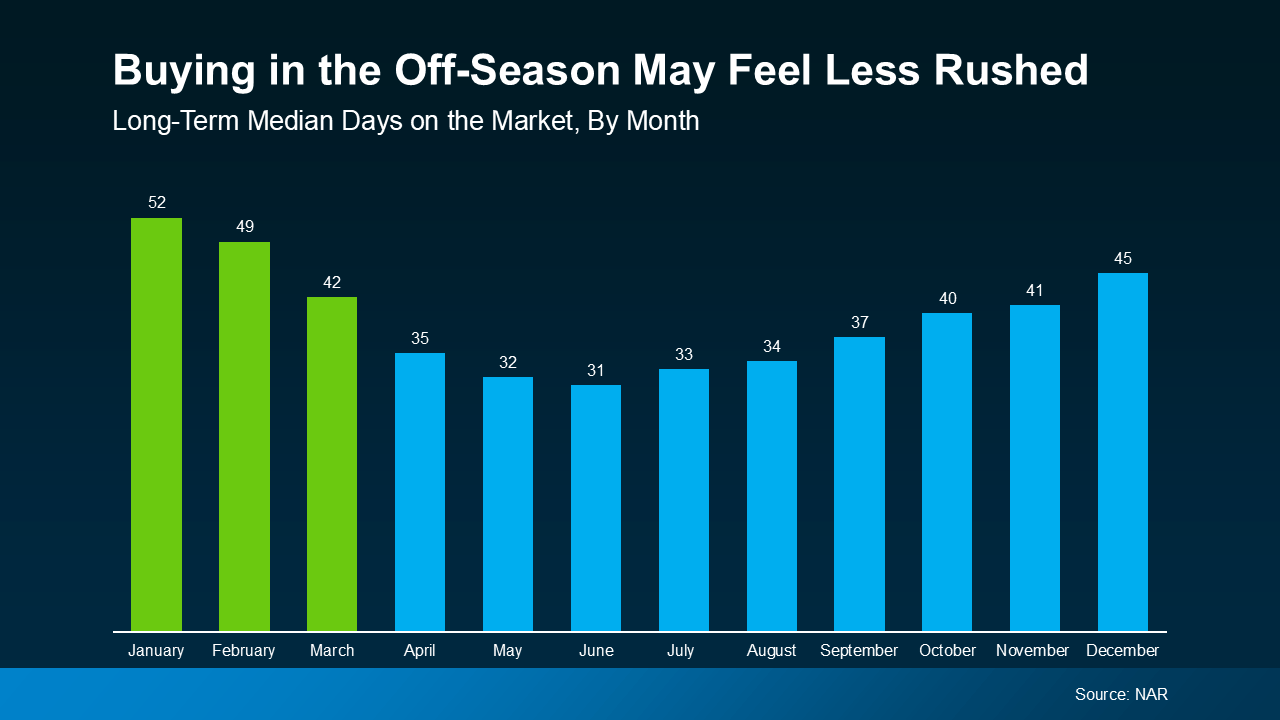 Fewer buyers in the market means you’ll likely have more time to make thoughtful decisions. It also means you may have more negotiating power. According to the Alabama Association of Realtors:
“A significant benefit of buying a home in winter is the reduced competition. Because of the perceived benefits of spring, many buyers delay the start of their house hunt. As a result, you will find fewer people competing for the same properties during winter. Less demand can translate into more negotiating power as sellers may be more willing to entertain offers or agree to concessions to get a deal closed quickly.”
With homes staying on the market longer, sellers may be more willing to negotiate. This can lead to better deals for you as a buyer, whether that means a lower price or added incentives, like sellers covering closing costs or making repairs. As Chen Zhao, an Economist at Redfin, points out:
“. . . buying during the off season means less competition from other buyers. That means potentially negotiating a better deal.”
Plus, when demand is lower, sellers often feel more pressure to work with serious buyers. This could give you an edge to negotiate terms that work best for your situation.
Historically, home prices tend to be at their lowest point in the winter months, too. According to data from NAR, home prices last year were at their lowest in January, February, and March — right before the spring buying season kicked in (see graph below):
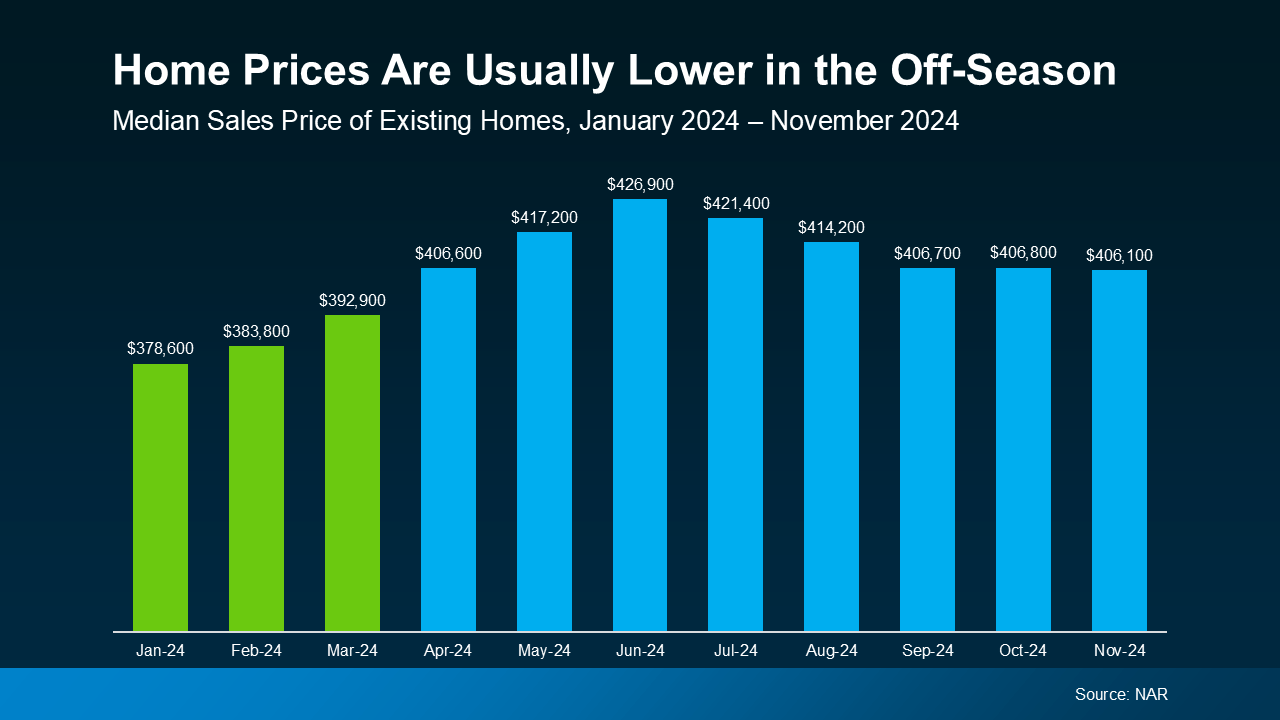 This trend isn’t new — Bright MLS shows between 2010 and 2024, home prices in January and February were, on average, 15% lower than during the month of peak home prices (typically June). Buying in the off-season means you’re more likely to avoid paying the premium prices that come with the high demand of spring.
On top of that, home prices generally appreciate over time, meaning they tend to go up year after year. That means if you’re ready to buy and you can make it happen, you’re not only taking advantage of what might be the lowest prices of the year, but you’re also locking in today’s price before it increases in the future.
While spring may seem like the obvious time to buy, moving before the peak season can give you significant advantages, like less competition, more negotiation power, and lower prices.
If you’re ready to explore your options, let’s connect.
Stay up to date on the latest real estate trends.

Single-family home prices remain nearly 25% above year-ago levels at $2,050,000, even after easing modestly from June's peak.

The most striking story in the East Bay right now is how little is available for sale.
Single-family home prices have surged more than 26% year-over-year, marking the strongest annual gain we've seen this year.
Prices are rising across the board, with the condo market posting its strongest year-over-year gains in years.

Education
In many cases, the insurance proceeds received from a covered claim far exceeds the cost of the one-time premium paid for an owner’s policy of title insurance.

David's East Bay experience, creativity, and dedication to his clients made him a perfect fit for Elevation Real Estate
San Francisco's single-family home market continues to reach new heights, with the median sale price climbing 22.56% year-over-year to $2,200,000. This marks one of th… Read more
Prices are on the rise across the board, with single-family homes and condos both posting year-over-year gains for the first time in over a year.
Median sale prices continue their remarkable ascent, with single-family homes up more than 21% and condos up more than 18% year-over-year.
You’ve got questions and we can’t wait to answer them.